
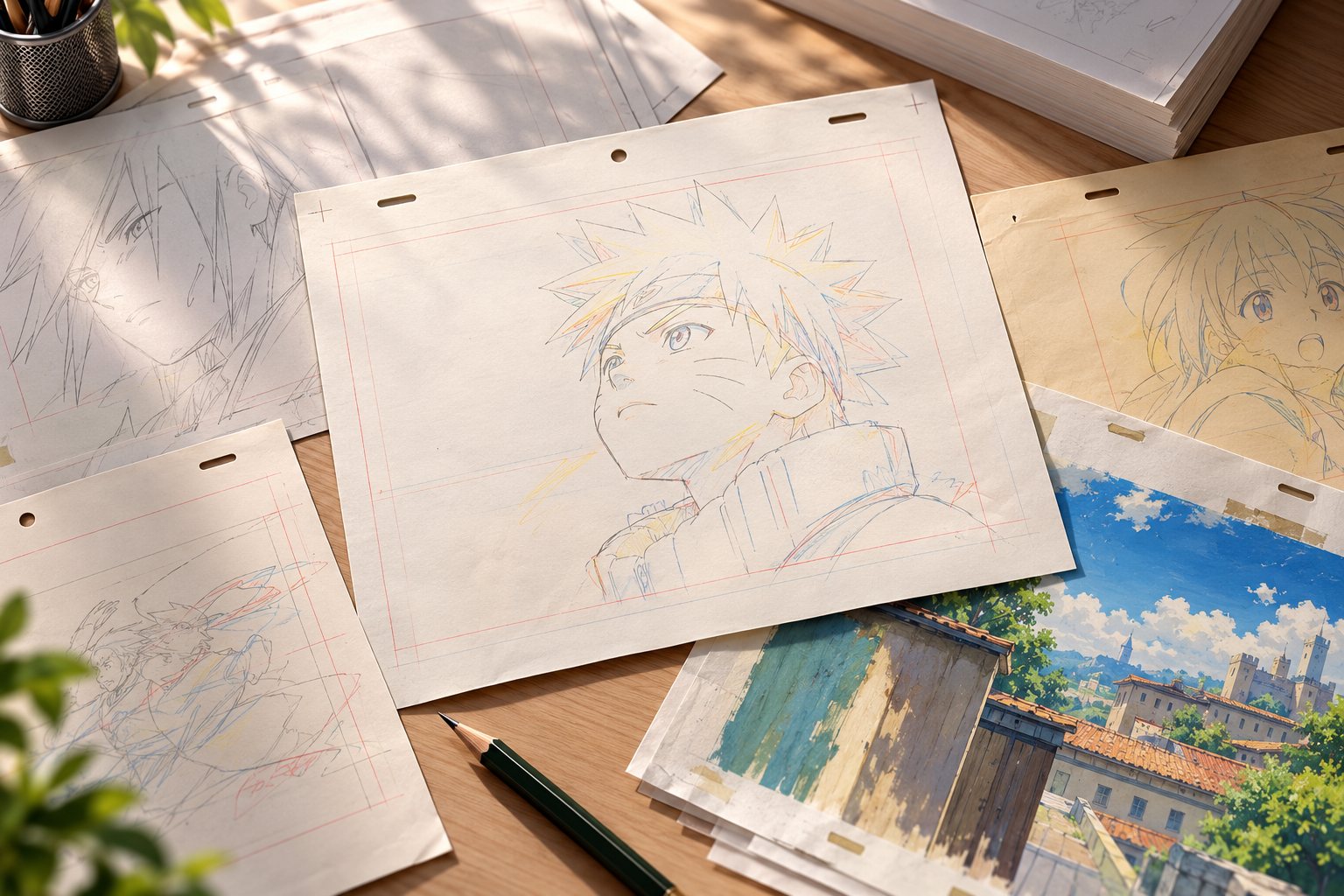
At Collectible Eternity Labs (CEL), we recognize that original animation artwork and production materials represent irreplaceable pieces of entertainment history.
From original sketches, genga, douga, layouts, and backgrounds to other paper-based production materials, each piece presents unique preservation considerations.
These materials were created across different eras, studios, and production environments using a wide variety of paper stocks, inks, graphite, pigments, and other media. Their long-term preservation requires an understanding of both the materials themselves and the conditions under which they were originally produced.
Our preservation approach combines specialized industry knowledge, scientific research, archival materials, and purpose-designed protective holders to help safeguard these collectibles for future generations.
Understanding How Acid Damages Paper
One of the most significant threats to paper-based collectibles is chemical deterioration. Depending on their composition, age, and storage history, paper materials may undergo several forms of degradation.
Brittleness and Fiber Breakdown
Acid hydrolysis breaks down molecular bonds within cellulose fibers, gradually reducing their strength and flexibility. Over time, affected paper can become brittle, fragile, and increasingly susceptible to tearing or cracking.
Yellowing and Discoloration
Oxidation and the degradation of compounds such as lignin can contribute to yellowing, browning, and other visible changes in paper. These processes can occur naturally as materials age and may be accelerated by unfavorable storage conditions.
Environmental Exposure
Elevated temperatures, excessive humidity, light exposure, and airborne pollutants can accelerate deterioration. Proper preservation therefore requires consideration of both the materials surrounding the artwork and the environment in which it is stored.
CEL's Purpose-Designed Blister Slab
CEL's blister slab has been developed with the preservation requirements of original paper-based animation artwork and production materials at the forefront.
Our approach addresses four primary areas of concern: archival material compatibility, airborne pollutants and volatile organic compounds (VOCs), environmental exposure, and physical damage.
1. Archival Material Compatibility
The materials used to protect a collectible should not become a source of deterioration themselves.
CEL utilizes archival-grade plastics and carefully selected internal materials chosen for their chemical stability and suitability for long-term preservation applications.
Unlike certain conventional plastics, such as formulations containing PVC, which may degrade or release potentially harmful compounds over time, appropriately selected archival materials are intended to minimize risks associated with chemical migration, off-gassing, and unwanted interactions with original artwork.
Our objective is to create a protective environment that does not unnecessarily introduce additional preservation risks.
2. Acid- and Pollutant-Absorbing Archival Paper
An important feature of every CEL blister slab is the integration of specialized acid- and pollutant-absorbing archival paper.
This material is designed to capture and retain certain acidic compounds and airborne pollutants that may contribute to the deterioration of paper-based collectibles.
Potential sources of these compounds include the natural aging of the artwork itself, surrounding materials, and pollutants introduced from the external environment.
By incorporating this archival material within our slabs, CEL provides an additional layer of preventive preservation intended to help manage potentially harmful compounds within the enclosed environment.
This approach may help reduce exposure to certain deterioration-related pollutants and support improved long-term storage conditions.
Rather than simply enclosing an item for presentation, CEL considers the chemical environment surrounding the collectible as part of its preservation strategy.
3. Environmental Protection
Paper-based animation materials are particularly sensitive to environmental conditions, including temperature fluctuations, humidity, and airborne contaminants.
CEL's blister slab incorporates archival-grade materials and a rigid protective enclosure designed to reduce direct exposure to handling, dust, and incidental contact with the surrounding environment.
Within the holder, our acid- and pollutant-absorbing archival paper provides an additional preservation measure intended to help capture certain harmful compounds that may accumulate as materials naturally age.
While the holder provides important physical protection, it is not designed to eliminate temperature or humidity fluctuations or prevent damage from light exposure.
CEL recommends storing encapsulated collectibles in stable, climate-controlled environments away from direct sunlight, excessive heat, and high humidity.
This combination of protective encapsulation, pollutant management, and responsible storage practices supports our broader commitment to long-term preservation.
4. Mechanical Protection and Structural Support
One of the most immediate preservation benefits of CEL's blister slab is protection against physical damage.
Original animation production materials are often delicate, particularly when dealing with aging paper, thin animation sheets, handwritten production notes, or artwork that has experienced decades of handling.
Repeated handling can introduce unnecessary risks, including:
- Creasing, folding, and edge damage
- Accidental tears and punctures
- Surface abrasion and smudging
- Pressure-related damage
- Damage associated with improper storage or transportation
CEL's rigid protective blister slab is designed to provide structural support and reduce the need for direct physical contact with the collectible.
By limiting unnecessary handling and helping protect against accidental contact, bending, and external pressure, encapsulation can reduce common sources of mechanical damage.
Our goal is to allow collectors to appreciate, display, and preserve their materials while minimizing unnecessary exposure to physical risks.
Preservation Begins Before Encapsulation
At CEL, preservation is not limited to the slab itself.
Our team combines extensive knowledge of animation production history, original artwork, and collectible materials with ongoing research into archival preservation methods.
Each submission undergoes professional examination to assess its characteristics, condition, and preservation considerations.
Our approach incorporates:
- Specialized knowledge of original production materials and their historical manufacturing methods
- Research into paper composition, aging, and deterioration
- Expert examination and condition assessment
- Archival material selection and protective encapsulation
- Digital documentation and internal reference databases
- Ongoing research into preservation technologies and holder development
This multidisciplinary approach allows CEL to evaluate collectibles individually rather than treating every production material as identical.
Our Commitment to Long-Term Preservation
CEL was founded by collectors who believe original artwork and production materials deserve a higher standard of care.
Our preservation philosophy combines expert examination, scientific research, archival-grade materials, and purpose-designed protective holders to address both immediate physical risks and long-term deterioration concerns.
While no encapsulation system can completely stop the natural aging process, thoughtful material selection, protective design, and appropriate storage practices can play an important role in reducing avoidable damage.
Our mission is not simply to authenticate and grade original artwork. It is to help preserve the history, craftsmanship, and cultural significance of these irreplaceable materials for generations to come.